An Evening with Nobel Laureate Robert Merton
Join the Belk College of Business as we celebrate the 20th anniversary of the M.S. in Mathematical Finance program. To mark this special occasion, we are honored to host an exclusive evening with Nobel Laureate Professor Robert Merton.
Professor Merton will explore one of the most critical financial challenges of our time: the global retirement funding crisis. In his talk, “Toward a Good Longevity Experience,” he’ll discuss how we can realistically fund a financially secure retirement for an aging global population.
Friday, Nov. 14, 2025 | Presentation – 5:30-6:30 p.m. | Reception – 6:30-7:30 p.m.
Dubois Center at UNC Charlotte Center City | 320 E 9th Street Charlotte, NC 28202
This is a must-attend event for Charlotte banking and finance leaders, including M.S. in Mathematical Finance alumni.
Don’t miss this unique opportunity to hear from a Nobel Prize winner on a topic that will define the future of our industry. Join us for an evening of insightful discussion, networking and celebration.
What you’ll learn
Look into the future of finance from one of its pioneers.
Professor Merton believes that mathematical finance science is the key to solving this universal challenge. He will present a practical framework for building a sustainable, long-term retirement system.
The centerpiece of his talk is a groundbreaking new bond innovation. He will explain how this new financial instrument is designed to:
- Provide a retirement funding solution for everyone, including the “informal labor” sector.
- Create new opportunities to fund critical infrastructure projects.
- Help reduce the cost of government debt.
About the speaker
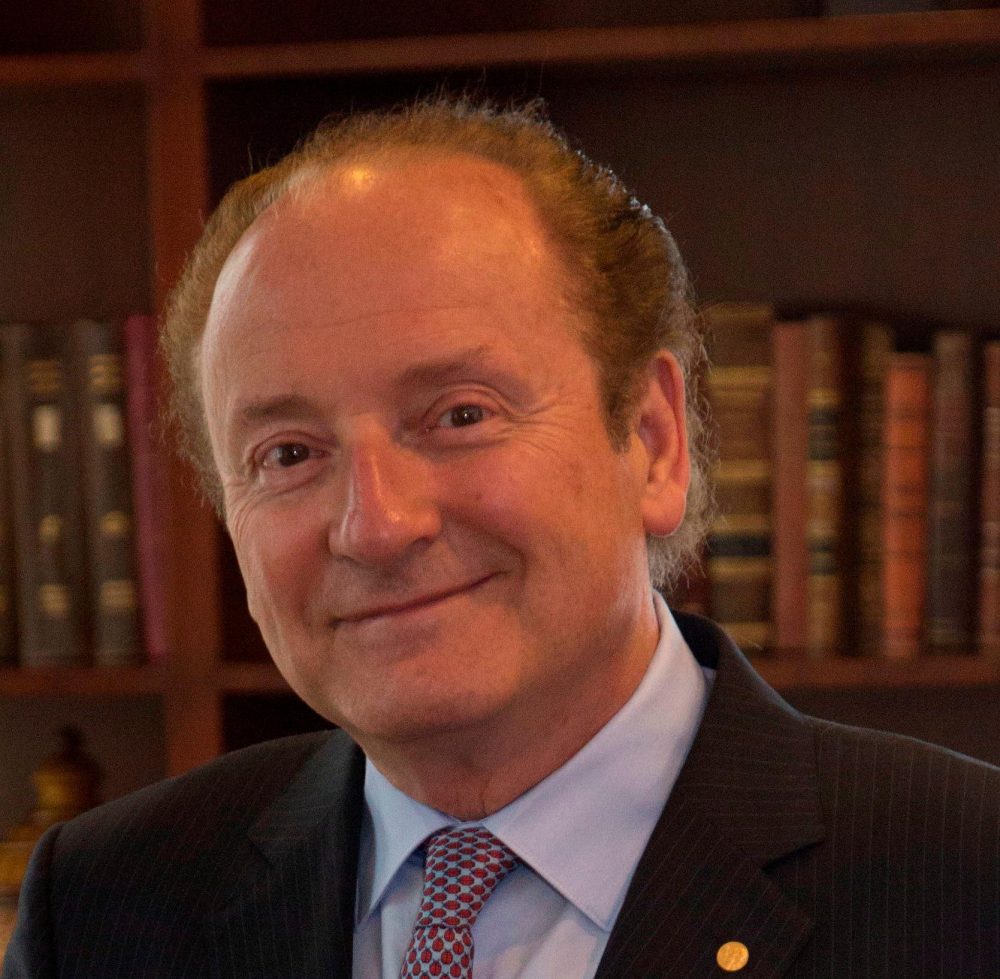
Robert C. Merton is the School of Management Distinguished Professor of Finance at the MIT Sloan School of Management and John and Natty McArthur University Professor Emeritus at Harvard University. He serves as Resident Scientist at Dimensional Fund Advisors Inc. and is the Honorary Chairman of the Institute for Global Economics, Seoul.
Merton received the Alfred Nobel Memorial Prize in Economic Sciences in 1997 for a new method to determine the value of derivatives. He is past president of the American Finance Association, a member of the National Academy of Sciences, and a Fellow of the American Academy of Arts and Sciences.
His research focuses on finance theory, including lifecycle and retirement finance, optimal portfolio selection, capital asset pricing, pricing of derivative securities, credit risk, loan guarantees, financial innovation, the dynamics of institutional change, and improving the methods of measuring and managing macro-financial systemic risk.
Merton is the author of Continuous-Time Finance and a coauthor of The Global Financial System: A Functional Perspective; Cases in Financial Engineering: Applied Studies of Financial Innovation; Finance; Financial Economics and Principles of Finance.
He has also been recognized for translating finance science into practice. Merton received the inaugural Financial Engineer of the Year Award in 1993 from the International Association for Quantitative Finance (formerly the International Association of Financial Engineers), which also elected him a Senior Fellow. He received the 2011 CME Group Melamed-Arditti Innovation Award and the 2013 WFE Award for Excellence from World Federation of Exchanges. A Distinguished Fellow of the Institute for Quantitative Research in Finance (‘Q Group’) and a Fellow of the Financial Management Association, Merton received the Nicholas Molodovsky and the James R. Vertin Awards from the CFA Institute. He is a member of the Halls of Fame of the Fixed Income Analyst Society, Risk magazine, and Derivatives Strategy magazine. Merton received Risk’s Lifetime Achievement Award for contributions to the field of risk management; the 2014 Lifetime Achievement Award from the Financial Intermediation Research Society; the 2017 Finance Diamond Prize from Fundación de Investigación, IMEF, Mexico; the 2022 Plan Sponsor Council of America Lifetime Achievement Award.
Merton received a B.S. in engineering mathematics from Columbia University, a M.S. in applied mathematics from California Institute of Technology, a Ph.D. in economics from MIT, and numerous honorary degrees from US and foreign universities.